Choose timezone
Your profile timezone:
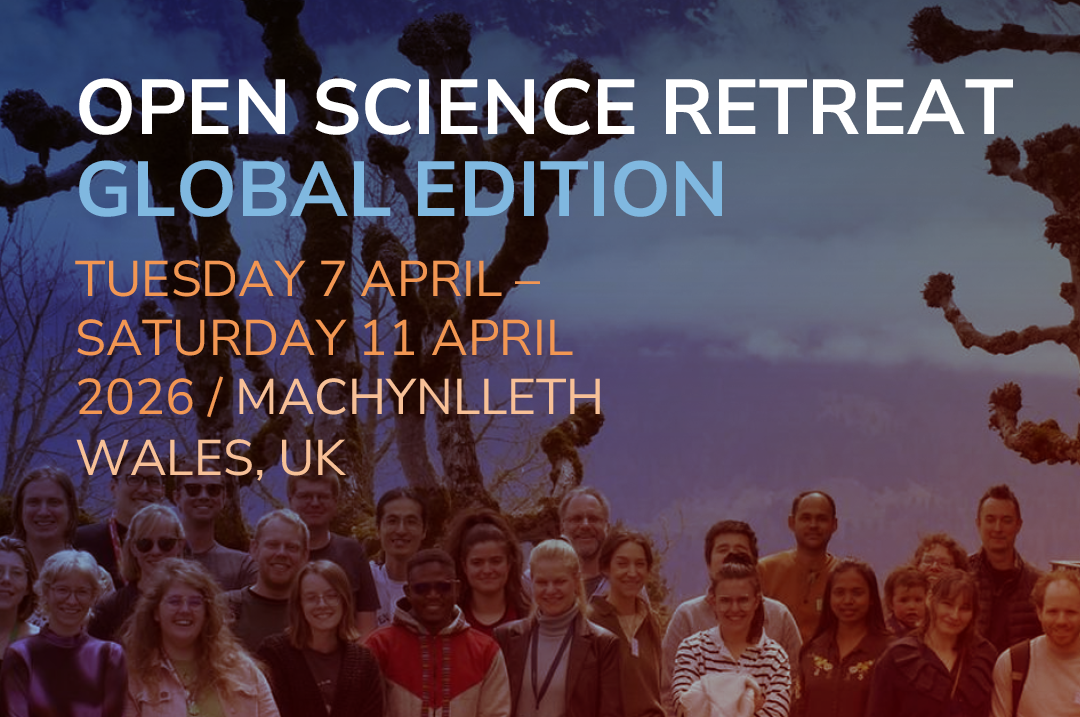
Whether you are just getting started with Open Science or are already an open hero.
Whether you are a researcher or provide research services.
If you are ready for a week of new ideas, productivity and rebooting: this retreat is for you!
The Open Science Retreat is a week full of scientific discussions and reflections, getting work done, making new friends and resetting.
The Retreat follows an unconference model. Except for the plenary sessions, all activities are optional.
This year, we will host one session of LIGHTNING TALKS for you to present your research in. We are aware that it can be difficult to attend an event with an unconventional agenda and therefore would like to offer a slot that fulfills more traditional academic criteria. Please submit an abstract if you want to be part of the LIGHTNING TALK session.
Submitting an abstract is absolutely NOT mandatory for your application!
| Oct 14, 2025 | Participation Applications Open |
| Nov 30, 2025 | Participation Applications Close |
| Dec 15, 2025 | Notifications of Participation & Travel Fellowships |
| Apr 6-7, 2026 | Arrival (check the website for info on early arrivals) |
| Apr 11 | Departure |
Inclusive in the participation fees are-
Also included
| SHARED ROOM OPTIONS | FEES |
| Shared room with en-suite bathroom |
£580 |
| SINGLE ROOM OPTIONS | FEES |
| Single room (twin bed) with en-suite bathroom | £800 |
| Ages | Fees |
| 1-16 years | £500* |
| 0-1 year | Free |
* if you bring children, please get in touch with us to talk about individual pricing! We can offer a reduction based on your preferred room setup. Contact us as soon as possible: hello@digiresacademy.org
Through various generous sponsors and other funds, we are able to offer several stipends to lower participation fees and in some cases completely cover participation fees altogether. Please indicate on your application if you would like to be considered for a fellowship.
The Open Science Retreat has always been open to partners, spouses, and children* so bring them along! Our planned social activites are open to all participants and their families. The venue also has many child-friendly feature with a dedicated playroom for crafting and fun. We are currently organising some kid-friendly workshops on site.
*Please note that we currently do not provide childcare at the event so please make your own arrangements in this regard. We do connect families bringing children before the event to get to know each other and (unconference) organize activities together.
Center for Alternative Technology
Machynlleth,
Powys,
SY20 9AZ
Wales, United Kingdom
The venue is easy to reach by public transit and also has free parking. It is also wheelchair-accessible.
For more details, please visit our website.


The Open Science Retreat 2026 is fiscally hosted by OLS. The Open Science Retreat organising team is supported by the UKRN.

DRA (5 mins) - Joyce Kao
UKRN (5 mins) - Ruth Davies
OLS (5 mins) - Bethan Iley
In this session we will see how many people are interested in which topic. Topic groups are usually comprised of 2-7 participants.
Topics that too few people are interested in will not be pursued further.
If groups get too big, we may split them into subtopics.
Choosing a topic can be difficult, yet you should choose one ;)
If you are unhappy with your choice, you can always switch.
At the end of the week each group will present their work.
Activities proposed by participants
Parallel Sessions
The Open Science Retreat always follows an unconference model. Except for the plenary sessions, all activities are optional.
Before the Retreat, participants are asked to propose topics for the unconference sessions. Teamwork topics will run through all sessions in the schedule that say "Unconference: Topic Groups" (instead of many small topics, we work on a few big ones).
On Monday we will decide together which teams will work on what, and who joins which team. The idea is not to follow one team lead, but to all be able to take up sub tasks that we are interested in. On Thursday the teams will present the outcomes of the work to all.
Participants can also propose to organise shorter sessions in the afternoons, or lead other (outdoor) activities, using an unconference board in the main room of the Retreat.
And lastly, participants can volunteer to join the mentoring programme, in which we will connect pairs of participants that can learn from each other.
Workshops and tours to learn more about environmental sustainability
The manufacture of concrete is responsible for around 6% of global CO2 emissions. This workshop explores the use of low carbon alternatives to concrete and other commonly used building materials. It makes full use of CAT’s unique collection of sustainable buildings and also covers the basic material properties commonly required in building design.
The tour covers the history of the site and of CAT and introduces the key sustainability themes used on site from renewable energy through to a wide variety of examples of environmentally responsible buildings. The tour also takes in CAT’s beautiful organic gardens with an option to include the Quarry Trail walk which surrounds the site and provides stunning views of the site and the Dyfi Biosphere in which it lies.
Parallel Sessions
The Open Science Retreat always follows an unconference model. Except for the plenary sessions, all activities are optional.
Before the Retreat, participants are asked to propose topics for the unconference sessions. Teamwork topics will run through all sessions in the schedule that say "Unconference: Topic Groups" (instead of many small topics, we work on a few big ones).
On Monday we will decide together which teams will work on what, and who joins which team. The idea is not to follow one team lead, but to all be able to take up sub tasks that we are interested in. On Thursday the teams will present the outcomes of the work to all.
Participants can also propose to organise shorter sessions in the afternoons, or lead other (outdoor) activities, using an unconference board in the main room of the Retreat.
And lastly, participants can volunteer to join the mentoring programme, in which we will connect pairs of participants that can learn from each other.
Workshops and tours to learn more about environmental sustainability
The story of water is an exploration of the role of water in our daily lives and to the health of the planet. A guided tour gives full guided access to CAT off grid water system, reservoir, water treatment facilities, hydro generator and water balanced railway. The tour ends at the CAT waste water treatment reed beds and finally the beautiful River Dulas.
For research to be effective, it must be both reproducible and replicable. Only then can false results be identified, existing findings built on and human error reduced. In short: meaningful and robust research can be done. However, research is often neither reproducible, nor replicable; this is often called a reproducibility crisis.
One factor contributing to the current state of research is the reliance of the paper as the primary means of documenting the research process. As a format, it leaves many gaps where knowledge gained during the research process is lost or not documented. These include, for example, research paths that were tried but then abandoned, or the hyperparameters of experiments, such as simulations, that were set but for which the reasons were not recorded.
My aim is to address this problem using semantic technologies. To address this problem, I am working on introducing a model of the research process in which information about abandoned research paths and general information can be recorded. This will enable researchers to document their processes in a machine-actionable format. To support researchers in working with this model, I will develop tooling let them document the entire research process; from inception to paper.
In this lightning talk, I will introduce the concept of the research model and present my planned tooling for documenting it, inviting feedback and ideas.
The topics I want to discuss are:
- How do you currently document your research
- What would your ideal tooling to document research steps look like?
Peer review has a noise problem. The "reviewer lottery" means a manuscript's fate often depends on who is assigned, their topical familiarity, their individual priorities, and how much time they have that week. This idiosyncratic variance treats similar work inconsistently: a clear source of unfairness.
Large Language Models (LLMs) can substantially reduce this noise. Even non-deterministic LLMs would appear to deliver far more consistent assessments than human reviewers, whose evaluations vary wildly across individuals and occasions. On noise reduction alone, the case for LLM integration is strong.
Bias, however, is more complicated. Human peer review is not merely noisy, but biased against low-prestige institutions, specific geographies, and other status markers, even under blinding. Yet we worry about algorithmic bias intensely while treating human bias as an unfortunate but acceptable baseline. This asymmetry is unjustified.
Both systems are biased, but their biases differ in structure. Algorithmic bias is relatively consistent, thus detectable and potentially correctable. Human bias is distributed and harder to measure. Yet inconsistency cuts both ways: distributed bias at least allows some unconventional work to pass through sympathetic reviewers, whereas consistent bias offers no such escape. Whether these trade-offs favour humans or algorithms is an empirical question that needs addressing.
In principle, triangulating between human and algorithmic assessment could help detect and reduce bias in both. But realising this requires transparency. Blanket prohibitions, as currently practised, push LLM use underground, making genuine comparison and mutual learning impossible. We need open experiments and conversations, not bans - and I would like to discuss how to approach this challenge.
Potential discussion questions
What low-risk research could compare human-only vs. LLM-augmented review on both consistency (noise) and fairness (bias)? How much of this can be done with existing (open) data? How can LLMs 'augment' rather than replace human review?
"Open Research Across Disciplines" is a an interdisciplinary guide and collection of resources for engaging on open research across a range of academic disciplines. The format of the guide is a preprint, and the content from this preprint has also been adapted on the UK Reproducibility Network website (https://www.ukrn.org/disciplines/). The guide has existed for 5 years, and we run a yearly call for contributions. However, we have never had systematic updating of the sections, or engaged in community co-curation of the resource beyond submitting things to be added. We wish to change this, and embark on hackathons to improve, expand, and diversify the resource. We wish to discuss next steps for this resource, and ideas for how best to implement these, from both a logistical and conceptual perspective.
In this interactive lightning talk, I use "the castle" as a symbol to explore what really protects our open research data and software. While open science supports data, software, experimental results, and other research artefacts to be publicly available and FAIR, it is equally important to consider the security of the same. I will present a simple live ‘Castle Stress Test’, which would help people score some dataset/research software on parameters such as documentation, licensing, testing, maintainer capacity, community, sustainability, and security practices. As the audience responds, we will see how strong - or unstable - our research becomes when one of these blocks is missing.
Drawing on my work in research software engineering, research data management, and recent findings from my study of the RSE landscape in Asia, I will highlight global patterns about gaps in resilient structures underneath. The castle metaphor helps us confront shared challenges such as unclear licensing, unsupported or outdated code, lack of community support, and unaddressed security risks.
Participants will leave with a memorable mental model and a practical question: Which part of your research castle needs reinforcement before the next storm?
The Leibniz Institute for Psychology (ZPID) is an open science institute based in Trier, Germany. Its mission is to encourage psychological researchers to adopt open science practices by offering tools such as the preregistration service PreReg (https://prereg-psych.org/) and the discipline-specific repository PsychArchives (https://psycharchives.org/). In my lightning talk, I will provide a short overview of the various tools provided by ZPID that could benefit retreat participants working in psychology and related fields.
Questionable research practices (QRPs) are well known and often discussed in meta-science circles—but how can we make them more memorable, understandable, and teachable beyond those? In this lightning talk, we present a set of 40 QRP Info Cards, each distilling one QRP into a compact, accessible format featuring a clear definition, examples, potential harms, preventive measures, and red flags – paired with fitting visuals drawn from meme culture, classical art, and public-domain imagery. By using familiar visual idioms, the cards are designed to be both pedagogically useful and easily shareable in talks, classrooms, workshops, and on social media.
The goal of these Info Cards is not merely to catalogue QRPs, but to foster education and critical reflection across audiences (e.g., students, peer reviewers, journal editors, and supervisors) with the ultimate aim of helping researchers avoid engaging in QRPs in the first place and equipping reviewers to better recognize them.
What we’d like to discuss:
· How can we increase the reach and visibility of these cards?
· What alternative formats (e.g., slide decks, zines, interactive media) would make them more adaptable to different teaching and training settings?
Feedback, critique, and remix ideas welcome!
Randomised controlled trials are often seen as transparency role models, given their seemingly high adherence to practices such as registration, sharing of protocols and statistical analysis plans. With nutrition research, however, this is not often the case. In this lighting talk I will present preliminary results of the work being done as part of my PhD and invite the audience to help solve this mystery once and for all. Guided by the Capability, Opportunity, Motivation and Behaviour (COM-B) framework as our detective toolkit, we will gather evidence coming from a survey of nutrition trialists. Together we will uncover what might be the real culprit behind low transparency in nutrition trials and brainstorm theory-drive interventions that could finally crack the case.
Systems thinking is an approach to understanding the non-linear relationships between multiple interacting components of "a thing". That thing can be a manufacturing system, an ecological system, or even something less tangible, such as the system being implemented to support the adoption of open science. By effectively mapping the system, we better understand how the different components and interconnections are supporting the goal, what blockers are not being well managed, and what leverage points can be targeted for optimisation. While many of us have an implicit understanding of the “adoption of open science” system, I believe that making this collective knowledge explicit will reduce the information asymmetries which weaken our collective efforts. Applying a formal system analysis to our work may, therefore, uncover new opportunities to coordinate and align our work, and expedite the success of this movement.
Question 1: How well do we all understand the complete system which is working towards the goal of open science adoption?
Question 2: How does a lack of complete understanding impact our efforts?
Replication is a cornerstone of cumulative science, providing essential insights into the reliability of research findings. Yet, despite an increasing number of published replications, they often fail to affect the belief in, and use of, the original conclusions. Replications are infrequently cited, usually disregarded in theoretical discussions, and—except for striking exceptions—fail to shift research agendas. This raises a critical question: If replications are fundamental to scientific self-correction, why do their results so often fail to shape knowledge?
In our study, we plan to use the FORRT Replication Database (FReD), a large community-driven repository of replications and original studies, to analyse the effect of failed replications on citations of original studies following the replication being made public.
In a second step, we will test whether the citation impact of failed replications is moderated by pre-specified study characteristics (e.g., journal rank, author team composition).
This study will a) estimate the causal effect of failed replications on citation rates of original studies, and b) identify characteristics that moderate this effect. Understanding what makes some replications more influential than others can inform strategies to increase their visibility and impact. In the talk I will present current status of the study.
These research software sharing, publication, and distribution checklists were inspired by similar checklists produced by the imaging community and are intended to address a niche not addressed by existing similar resources such as guidance for creating research software management plans. They provide a tiered approach to completing the checklists with each item able to be completed at a different level:🥉Bronze,🥈Silver,🥇Gold, and 🏆 Platinum where bronze is highly attainable and platinum is going well above and beyond. With this approach I'm aiming to somewhat gamify the process as well as to provide aspirational goals and not just to set a minimum floor for compliance. The checklists are tailored based on a simple taxonomy of research software output types: 'records of specific analyses', 'web based services', 'software packages', and 'pipelines or workflows'. Each of these types of software output have overlapping but slightly different considerations for how best they can be shared, published, and distributed so each has its own checklist. Each checklist is comprised of items which address these 11 common themes: 📒 Source control, © Licencing, 📖 Documentation, 🔗 Making Citable, ✅ Testing, 🤖 Automation, 👥 Peer review / Code Review, 📦 Distribution, 💽 Environment Management / Portability, 🌱 Energy Efficiency, and ⚖ Governance, Conduct, and Continuity. The checklists are provided as simple markdown files making the checklists easy to include in a project repository like standard licenses and codes of conduct. Each theme includes its checkbox items and an expandable section which expands with advice, links, and resources on how to complete these checkboxes. There are repo badges to display the type of checklist, overall score, medal, and self vs. third party assessment. See rsspdc.org for more details.
Activities proposed by participants
Parallel Sessions
The Open Science Retreat always follows an unconference model. Except for the plenary sessions, all activities are optional.
Before the Retreat, participants are asked to propose topics for the unconference sessions. Teamwork topics will run through all sessions in the schedule that say "Unconference: Topic Groups" (instead of many small topics, we work on a few big ones).
On Monday we will decide together which teams will work on what, and who joins which team. The idea is not to follow one team lead, but to all be able to take up sub tasks that we are interested in. On Thursday the teams will present the outcomes of the work to all.
Participants can also propose to organise shorter sessions in the afternoons, or lead other (outdoor) activities, using an unconference board in the main room of the Retreat.
And lastly, participants can volunteer to join the mentoring programme, in which we will connect pairs of participants that can learn from each other.
We'll either walk or bus down to Machynlleth to check out some of the amazing local bookstores around.
The unique location of the CAT site allows us to offer a circular walking tour of real world turbine sites located around it. Participants will gain real world knowledge of the issues involved in siting and maintaining wind turbines and the selection of good generation sites.
Planned hike led by Tim Brewer (CAT staff). Be sure to have sturdy walking/hiking shoes, dress in layers & waterproofs, and pack your water bottle!
This will be a hike up to the Bro Dyfi Community Renewables site. We can accommodate up to 22 persons on this tour. Sign up onsite if you want to join!
Parallel Sessions
The Open Science Retreat always follows an unconference model. Except for the plenary sessions, all activities are optional.
Before the Retreat, participants are asked to propose topics for the unconference sessions. Teamwork topics will run through all sessions in the schedule that say "Unconference: Topic Groups" (instead of many small topics, we work on a few big ones).
On Monday we will decide together which teams will work on what, and who joins which team. The idea is not to follow one team lead, but to all be able to take up sub tasks that we are interested in. On Thursday the teams will present the outcomes of the work to all.
Participants can also propose to organise shorter sessions in the afternoons, or lead other (outdoor) activities, using an unconference board in the main room of the Retreat.
And lastly, participants can volunteer to join the mentoring programme, in which we will connect pairs of participants that can learn from each other.
Quick intro - what are Zines and how to make one!
Submit a random presentation slide.
Watch other people pretend like they know what it means and present it.
Want to actively participate? Sign up to be a presenter to join the contest for a chance to become be the Slide Karaoke Champion!
Activities proposed by participants
Parallel Sessions
The Open Science Retreat always follows an unconference model. Except for the plenary sessions, all activities are optional.
Before the Retreat, participants are asked to propose topics for the unconference sessions. Teamwork topics will run through all sessions in the schedule that say "Unconference: Topic Groups" (instead of many small topics, we work on a few big ones).
On Monday we will decide together which teams will work on what, and who joins which team. The idea is not to follow one team lead, but to all be able to take up sub tasks that we are interested in. On Thursday the teams will present the outcomes of the work to all.
Participants can also propose to organise shorter sessions in the afternoons, or lead other (outdoor) activities, using an unconference board in the main room of the Retreat.
And lastly, participants can volunteer to join the mentoring programme, in which we will connect pairs of participants that can learn from each other.
Parallel Sessions
The Open Science Retreat always follows an unconference model. Except for the plenary sessions, all activities are optional.
Before the Retreat, participants are asked to propose topics for the unconference sessions. Teamwork topics will run through all sessions in the schedule that say "Unconference: Topic Groups" (instead of many small topics, we work on a few big ones).
On Monday we will decide together which teams will work on what, and who joins which team. The idea is not to follow one team lead, but to all be able to take up sub tasks that we are interested in. On Thursday the teams will present the outcomes of the work to all.
Participants can also propose to organise shorter sessions in the afternoons, or lead other (outdoor) activities, using an unconference board in the main room of the Retreat.
And lastly, participants can volunteer to join the mentoring programme, in which we will connect pairs of participants that can learn from each other.
The famous inventor Zangemann lives in a huge villa high above the city. Adults and children alike love his inventions and are desperate to have them. But then something happens: when Zangemann wants to take another close-up look at his inventions during a walk through the city, a child hits him in the shin with the skateboard. That hurts! Enraged, the inventor makes a momentous decision... The clever girl Ada sees through what is going on. Together with her friends, she forges a plan.
Following the success of the illustrated book "Ada & Zangemann - A Tale of Software, Skateboards, and Raspberry Ice Cream", the story is since 2024 also available as an animated movie.
Activities proposed by participants
Parallel Sessions
The Open Science Retreat always follows an unconference model. Except for the plenary sessions, all activities are optional.
Before the Retreat, participants are asked to propose topics for the unconference sessions. Teamwork topics will run through all sessions in the schedule that say "Unconference: Topic Groups" (instead of many small topics, we work on a few big ones).
On Monday we will decide together which teams will work on what, and who joins which team. The idea is not to follow one team lead, but to all be able to take up sub tasks that we are interested in. On Thursday the teams will present the outcomes of the work to all.
Participants can also propose to organise shorter sessions in the afternoons, or lead other (outdoor) activities, using an unconference board in the main room of the Retreat.
And lastly, participants can volunteer to join the mentoring programme, in which we will connect pairs of participants that can learn from each other.